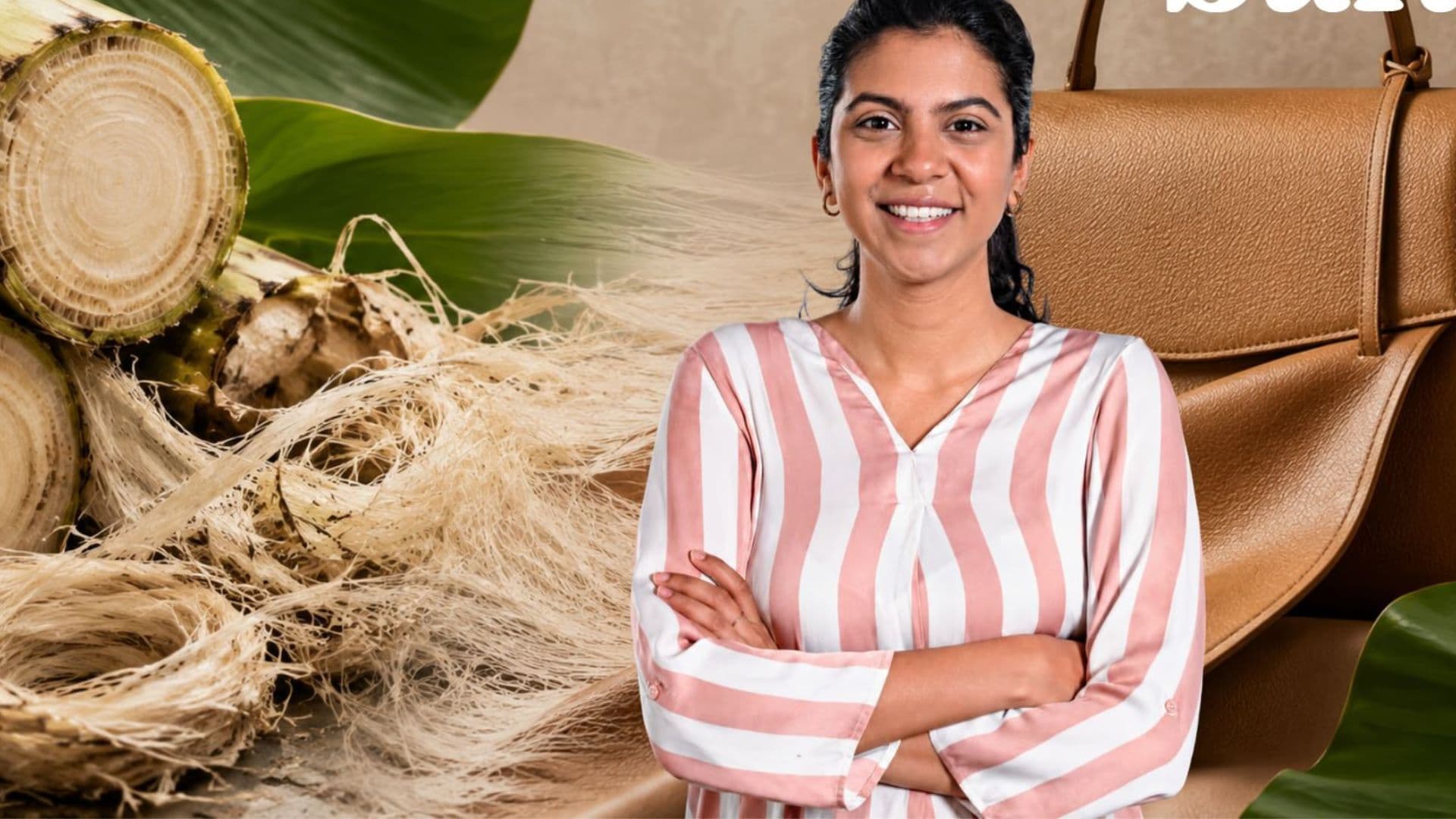
Banofi founder Jinali Mody couldn’t find a sustainable leather bag she felt good about, so she built a material from banana stems that uses 93% less water and 97% less CO2 than conventional leather
Jinali Mody was looking for a leather bag that she wouldn’t feel guilty buying. What she discovered, however, was a dilemma facing the industry: animal leather has extreme environmental and ethical ramifications, while vegan leather bags are overwhelmingly made from plastic. Neither satisfied her, so in 2022 she developed her own solution.
The company she founded, Banofi, takes banana plant stems, which farmers across India burn or discard after harvest, and converts them into a cellulose-based material that mimics the grain, texture, and feel of animal hide.
The Raw Material Nobody Wanted
India is the largest producer of bananas, producing as many as 120 million tons of stem wast per year. Once the bananas are harvested from the plant, the stem is cut down to make room for new plants. Banofi carefully extracts the fibers from the banana stems and combines them with binders and natural starches to produce sheet materials that resemble leather. It claims to use 93% less water and 97% less CO2 than leather, a figure validated by the UN Environment Programme.
Recognition That Has Opened Doors
Mody, who holds a biochemistry degree from Mumbai’s St Xavier’s College and a master’s from the Yale School of the Environment, won the $1 million Hult Prize in 2023, announced in Paris by Stella McCartney. That year, Banofi also took the top spot at the Wege Prize. In 2025, Mody was named a UN Environment Programme Young Champion of the Earth.
The company has since piloted with over 150 brands across fashion, lifestyle, and automotive sectors, received a grant from Mercedes-Benz, and is in talks with luxury conglomerates whose names remain undisclosed. More than 100 small-scale farmers now earn additional income selling stems they once burned.