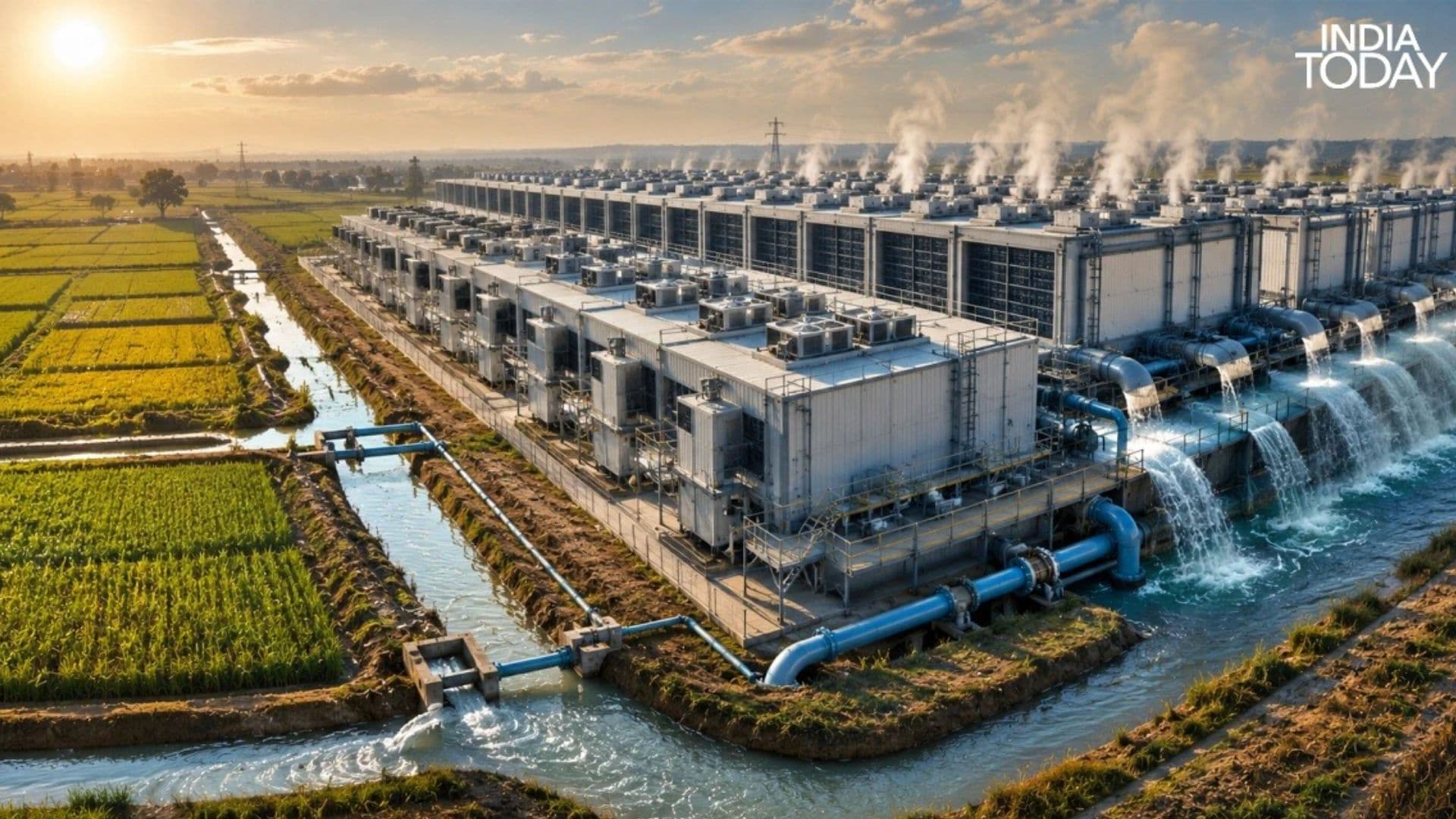
Cimcon’s sensor-driven infrastructure has helped save over 2 billion kilowatt-hours of electricity while improving water reliability across cities, towns and villages
For many Indian households, the day often begins with uncertainty over water supply — whether it has arrived, whether the tank is full, and when to switch on the pump. In villages, women frequently spend hours fetching water where piped connections remain unreliable. Ahmedabad-based company Cimcon has spent decades tackling this problem using sensors, automation and artificial intelligence, enabling authorities to monitor water networks, pumping stations and street lights in real time.
From Oil Wells to Water Networks
Cimcon’s journey began in 1988, when founder Anil Agrawal returned to India after studying automation abroad, at a time when most utilities relied on paperwork, field inspections and endless phone calls, and technology was seen as too expensive or unnecessary. One of the company’s earliest breakthroughs came in the early 1990s with ONGC, where it built a monitoring system for remote oil wells that could send alerts when production stopped, known internally as the “speaking wells” project. That success eventually led Cimcon into water management, starting with a project in the hills around Dehradun where manual pump operations were causing frequent disruptions.
A “Nervous System” for Cities
Rajnish Dashottar, Acting Director of the company, describes how the system acts like “the nervous system” of the city through the use of a network of sensors that are strategically placed in infrastructure throughout the city to provide real time data on water pressure, flow, reservoir levels and quality to a Location Command Centre. Having this level of visibility provides operators with the ability to quickly identify leaks, provide predictive responses to equipment failure and optimise pump efficiency in order to reduce unnecessary energy consumption.
Real Impact on Daily Life
Cimcon has reported that they have saved an estimated 2 billion kilowatt hours of energy through their interventions. Their efforts to provide access to drinking water for rural women have also saved the time typically spent by women going out to collect water. As Agrawal puts it, the end goal is that people will have reliable infrastructure and no longer have to consider how it will affect them personally.