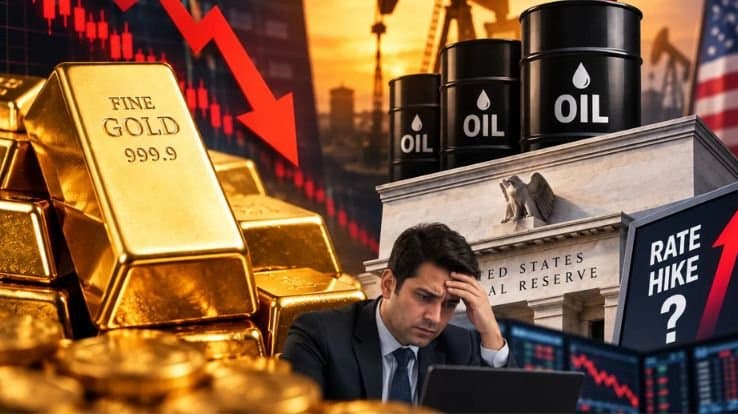
Bullion comes under pressure as higher energy costs raise inflation concerns ahead of the Federal Reserve’s policy meeting.
On Monday, gold prices moved lower as a sharp rise in crude oil prices added to inflation concerns and strengthened expectations of a possible US Federal Reserve rate hike. The shift in rate expectations has put additional pressure on the non-yielding precious metal ahead of the Fed’s policy meeting this week. Spot gold fell 0.6% to $4,321.26 per ounce by 0724 GMT, while US gold futures declined 1.1% to $4,361.20. The decline followed gold’s third straight weekly fall on Friday. Markets are now focused on the Federal Reserve’s September 15-16 policy meeting.
Higher interest rates generally weigh on gold because the metal doesn’t generate interest or dividends. When bond yields rise, investors have greater incentive to hold interest-bearing assets instead of bullion.
Oil prices add to inflation concerns.
The latest pressure on gold has also come from the energy market. Oil prices climbed more than 2% on Monday amid renewed concerns over supplies from the Middle East.
Fresh attacks involving the Houthis and shipping routes in the Gulf, along with continuing tensions involving Iran, have added to worries about potential disruptions to global oil supplies. The closure of a key Saudi oil pipeline has further complicated the supply outlook. Higher crude prices can feed into broader inflation by increasing transportation, manufacturing and other operating costs. For central banks, persistent energy-driven inflation can make monetary easing more difficult.
Markets increase rate hike bets.
Recent US inflation data has also shifted expectations. Consumer prices accelerated in August, while a measure of underlying inflation recorded its strongest increase in four months.
According to the CME FedWatch Tool, traders were pricing in an 87% probability of a Federal Reserve rate increase at the upcoming meeting, compared with around 67% before the latest inflation data. The stronger rate outlook has supported US Treasury yields, creating another headwind for gold. The US dollar also remains an important factor because a stronger dollar generally makes gold more expensive for buyers using other currencies.
Market participants are balancing two opposing forces: higher yields and rate expectations are weighing on bullion, while continued Middle East tensions could encourage safe-haven demand.