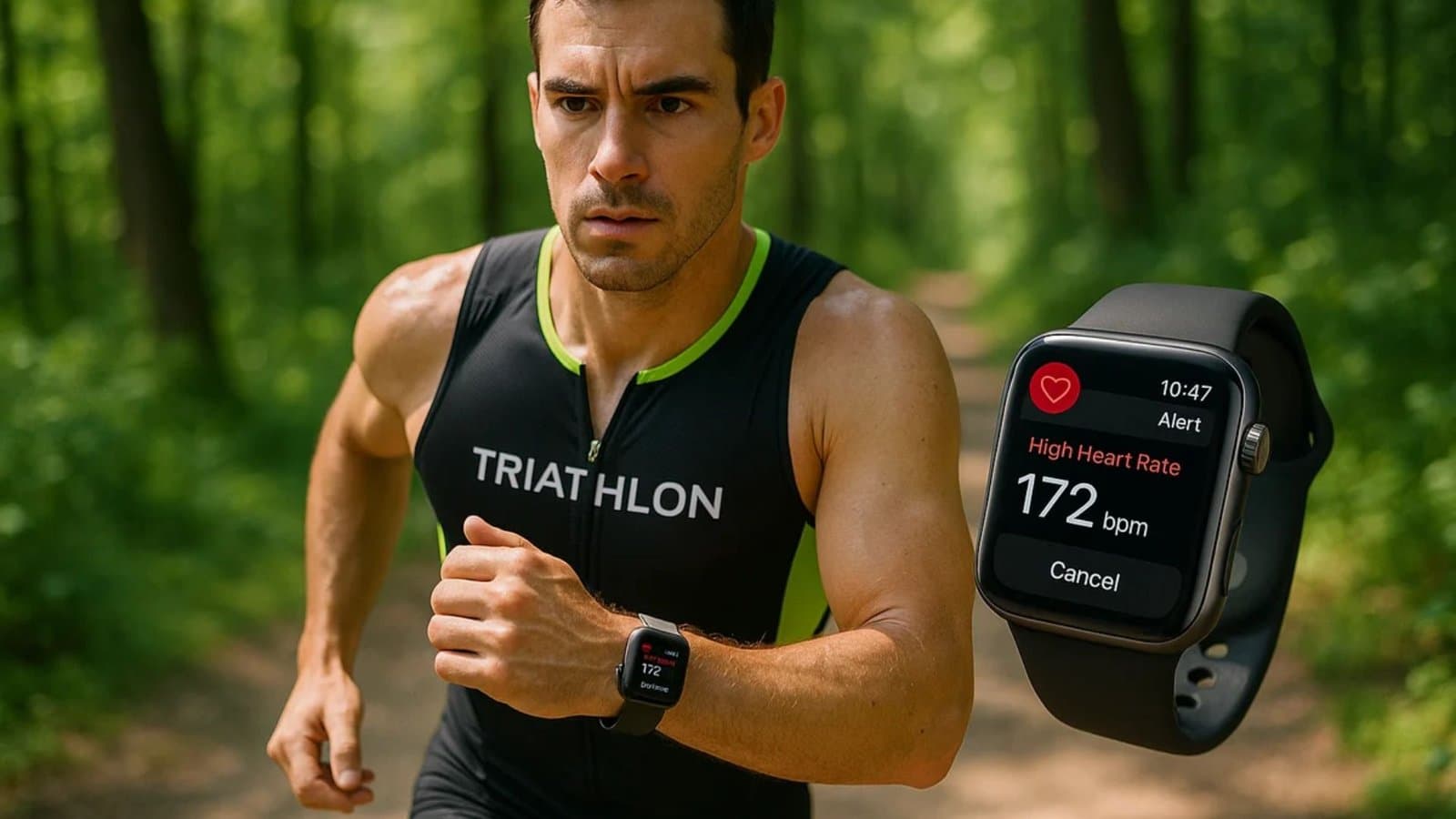
A routine check during training led to further medical tests and the discovery of an underlying congenital heart condition.
A triathlon runner’s experience recently has highlighted how wearable tech can sometimes draw attention to health issues that might otherwise go unnoticed. Connor, a triathlon enthusiast, noticed his heart rate rising to around 219 beats per minute while training and competing. Concerned by the unusually high reading, he used the ECG feature on his Apple Watch to take a closer look at his heart rhythm.
The electrocardiogram showed signs associated with atrial fibrillation, a type of irregular heart rhythm. Rather than treating the watch reading as a diagnosis. Connor sought medical advice, which led to additional examinations.
Further tests revealed a congenital heart condition.
Doctors subsequently discovered that Connor had a congenital heart condition that had not previously been identified. The condition was serious enough to require open-heart surgery.
According to the account shared by Apple, Connor later recovered from the procedure. The company has featured his experience in a video as part of a wider series focusing on Apple Watch health and safety features. The case illustrates one of the increasingly common uses of wearable devices: providing users with health information that can encourage them to seek professional medical attention when something appears unusual.
What can the Apple Watch ECG detect?
The ECG app uses electrical sensors built into supported Apple Watch models to record the heart’s electrical activity. The feature is available on Apple Watch Series 4 and newer models, as well as Apple Watch Ultra devices. Apple Watch SE models don’t include the ECG function. The technology can identify signs that may be consistent with atrial fibrillation, but it’s not intended to replace a clinical examination or a hospital-grade diagnostic assessment.
Apple has also previously clarified that its irregular rhythm notifications don’t continuously monitor for atrial fibrillation. Instead, the system periodically checks heart rhythm and can notify users when it detects patterns associated with the condition. Connor’s experience demonstrates the potential value of wearable health technology, but it also underlines an important limitation. A smartwatch can provide useful information and prompt someone to investigate an unexpected change, but medical professionals remain responsible for diagnosis and treatment.
As health-monitoring features become more common in consumer devices, the focus is increasingly shifting from simple fitness tracking to tools that can encourage earlier conversations with healthcare providers. In cases involving unusual heart rates or rhythm readings, seeking qualified medical advice remains essential rather than relying solely on a wearable device.