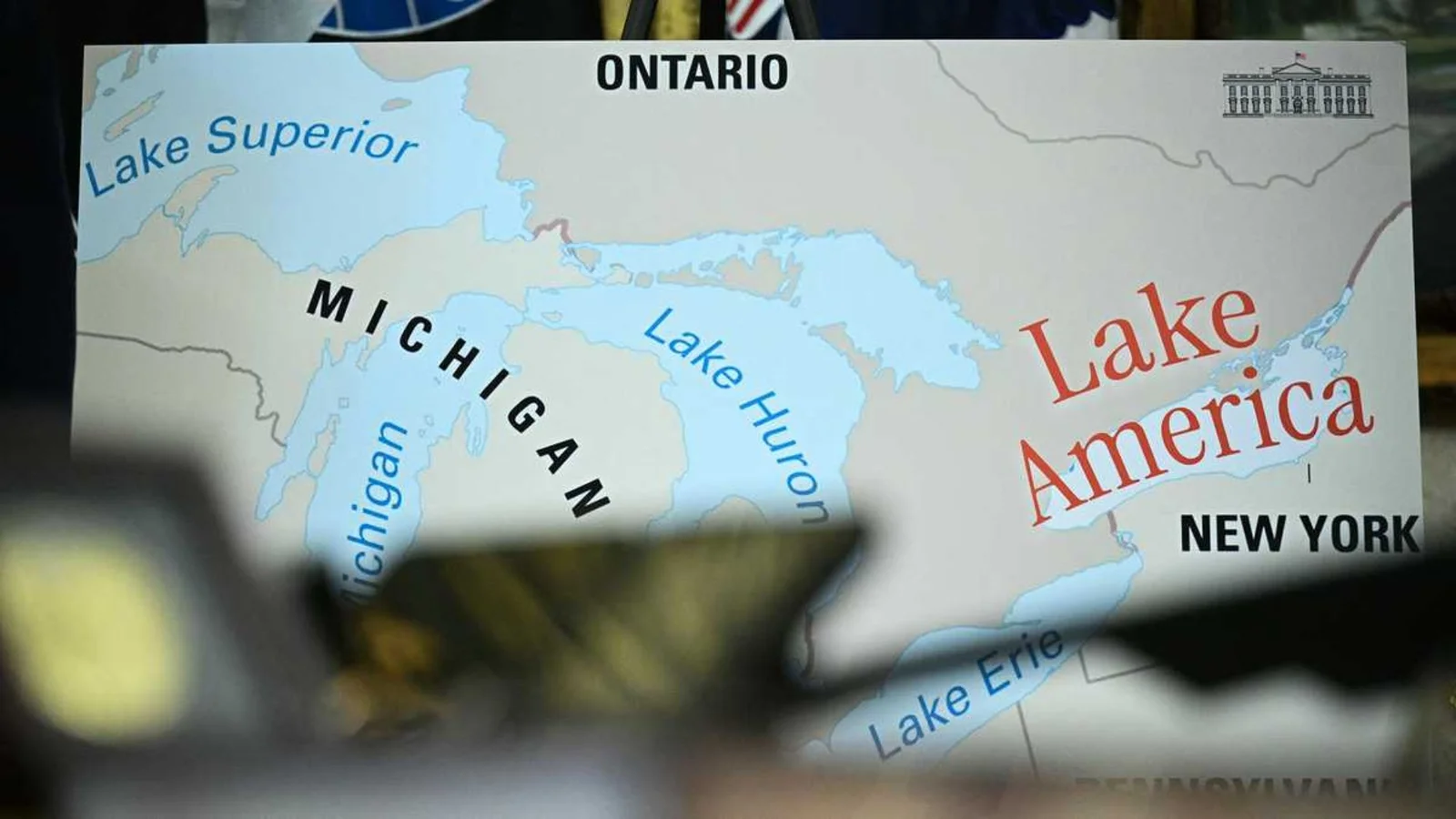
The long-standing mapping service has seen a sharp rise in downloads after keeping the traditional name Lake Ontario on its maps.
MapQuest has unexpectedly returned to the spotlight after refusing to rename Lake Ontario as “Lake America,” following an executive order issued by US President Donald Trump. The decision has triggered a sharp increase in downloads, pushing the mapping app to the top of Apple’s US App Store rankings.
Trump’s orders directed the US Department of the Interior to update the name of Lake Ontario in the country’s official geographic naming system. The move came amid heightened tensions between the United States and Canada, including an ongoing trade dispute. MapQuest, however, decided to retain the name Lake Ontario.
More on MapQuest taking a different approach.
The company said it follows a policy of keeping historical and familiar geographic names on its maps. It had taken a similar position when the Gulf of Mexico was renamed the Gulf of America for US government purposes in 2025.
The company has also given users a tool to create their own labels for the lake, adding a lighter element to an otherwise politically sensitive dispute. The decision has translated into an unexpected revival for MapQuest. The app moved to No. 1 among free apps on Apple’s US App Store, overtaking widely used applications. It also reached the top position in Canada, according to reports.
Contrasting approaches.
MapQuest said its usage increased roughly 50 times compared with the previous week. Other reports have also pointed to hundreds of thousands of new downloads following the controversy.
The development is notable because MapQuest, one of the earliest major online mapping services, has faced intense competition from Google Maps and Apple Maps over the years. On the other hand, Google Maps and Apple Maps have taken a different approach. Google displays “Lake America” to users in the US while retaining “Lake Ontario” for users in Canada. Apple has also changed the name for US users, although reports have indicated some inconsistencies during the rollout.
The contrasting approaches highlight how digital mapping services can handle government-backed geographic name changes differently, depending on their policies and where their users are located.
For MapQuest, the dispute has produced an unusual outcome: a decades-old navigation service has gained renewed attention and a significant increase in users after choosing not to adopt the politically driven name change.