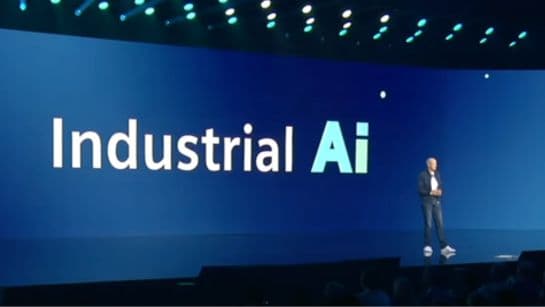
New platform reflects a growing shift toward AI-powered manufacturing, automation, and data-driven operations.
Artificial intelligence (AI) has been steadily moving beyond chatbots and consumer applications into factories, production facilities, and supply chains. Amidst this evolving trend, Siemens has introduced Intelligence Center X, a new industrial AI platform designed to help organisations integrate AI into everyday industrial operations at scale. The launch comes at a time when manufacturers globally seek practical ways to deploy AI beyond pilot projects.
While many businesses have experimented with AI-driven solutions over the past few years, a significant challenge has been connecting these technologies with existing industrial systems, workflows, and operational data. Industry research suggests that integration complexity, data fragmentation and governance concerns remain key barriers to widespread AI adoption in manufacturing environments.
Bridging the gap between AI insights and real-world execution.
Unlike traditional enterprise AI applications, industrial AI focuses on improving operational efficiency, production planning, maintenance, quality control and supply chain management. As manufacturers increasingly embrace Industry 4.0 technologies, the demand for intelligent systems capable of analysing large volumes of operational data has grown significantly. Siemens’ new platform aims to bridge the gap between AI insights and real-world execution by connecting industrial data, workflows and AI agents within a single governed environment.
The objective is to enable businesses to automate decision-making processes while maintaining human oversight and operational control. One of the most common criticisms of industrial AI has been the gap between proof-of-concept projects and large-scale deployment. Many organisations have struggled to translate promising pilot programmes into measurable business outcomes. According to Siemens, Intelligence Center X is designed to address this issue by providing a framework that allows AI applications to operate within existing business processes rather than as standalone experiments. Early implementations cited by the company have reportedly resulted in reduced manual workloads and faster issue resolution across manufacturing operations. The platform also reflects a broader industry shift towards what experts describe as “human-in-the-loop” AI, where artificial intelligence supports decision-making while people continue to oversee critical operational processes. This approach aligns with the growing Industry 5.0 movement, which emphasises collaboration between humans and intelligent systems rather than complete automation.
Industrial AI and the future of manufacturing.
In India, the conversation around AI-driven manufacturing has also gained momentum as businesses and policymakers look to strengthen the country’s industrial competitiveness. Industry leaders increasingly view advanced manufacturing technologies as a critical component of long-term economic growth and digital transformation strategies.
As industrial AI continues to mature, platforms that simplify deployment, governance and integration could play an important role in determining how quickly manufacturers move from experimentation to large-scale adoption. Siemens’ latest announcement reflects this broader transition, signalling that industrial AI is becoming an increasingly important part of the future manufacturing landscape.