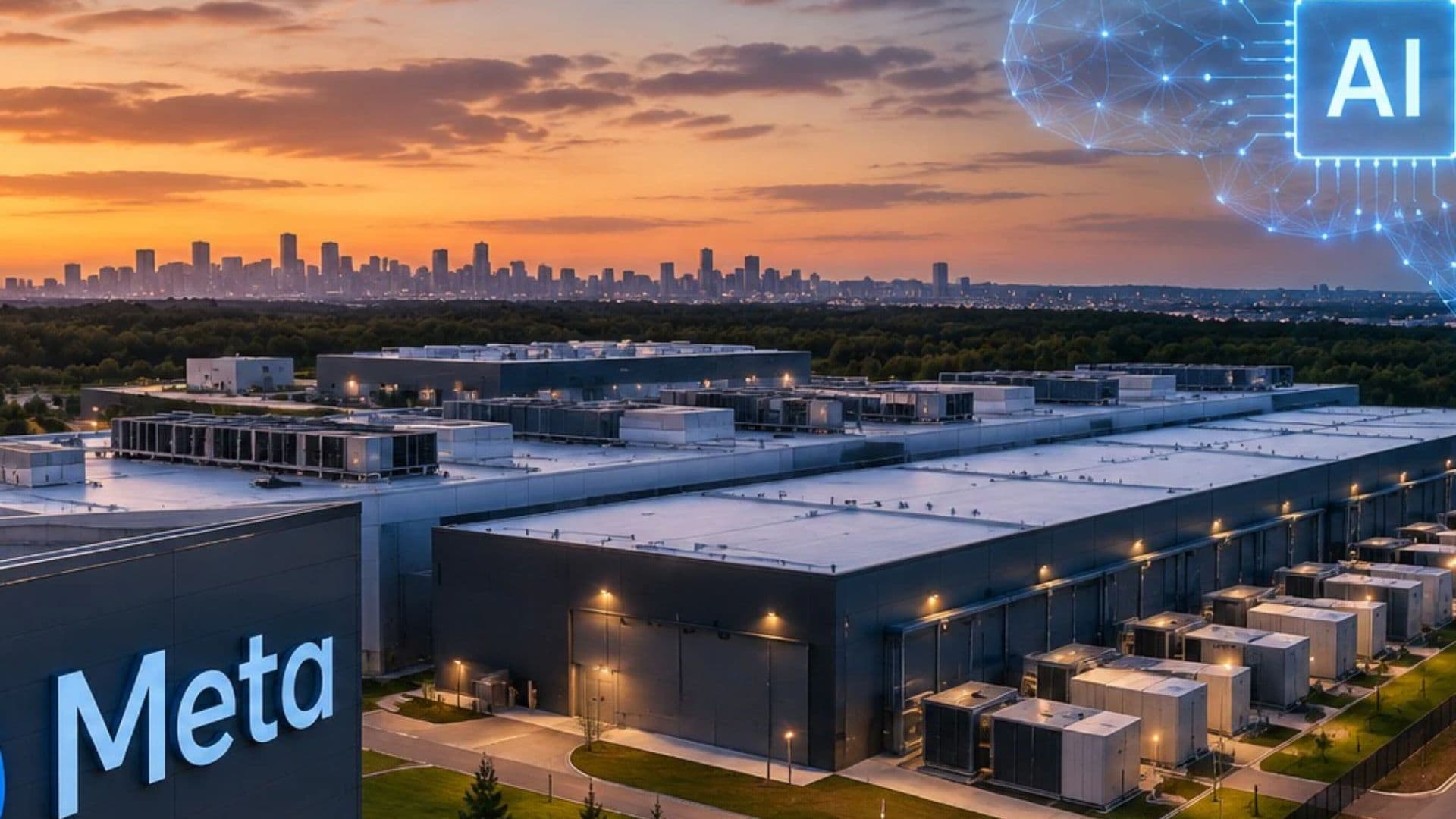
An internal memo reviewed by Reuters reveals that Meta’s custom Iris chip passed six weeks of bug testing without major issues, marking a turning point for an in-house silicon effort that has struggled since its launch five years ago
Meta Platforms is preparing to manufacture its first custom AI chip at scale from September, according to an internal memo reviewed by Reuters, as the Facebook and Instagram parent pushes to double its computing infrastructure to 14 gigawatts by 2027 and reduce its dependence on Nvidia and AMD.
The Chip and What It Does
The chip, code-named Iris, is part of Meta’s four-generation Meta Training and Inference Accelerator programme, designed entirely in-house to power the AI systems running across its social media platforms. Meta is working with Broadcom on the design and TSMC on manufacturing, a model that mirrors approaches taken by Google and Apple. Testing completed in just six weeks without uncovering major issues, a result the memo describes as positive momentum for a project that has had a difficult history since its inception more than half a decade ago.
The Scale of the Infrastructure Ambition
Meta plans to deploy seven gigawatts of computing infrastructure this year alone, adding 1 gigawatt in the first half and forecasting another 5.5 gigawatts by year end. That capacity is set to double again to 14 gigawatts in 2027. To put that in context, one gigawatt of energy is enough to power approximately 800,000 homes. The company expects to spend as much as $145 billion on AI infrastructure this year, a significant portion of Big Tech’s projected $700 billion combined outlay on the technology.
Locking In the Supply Chain
To support this expansion, Meta has secured long-term multi-year supply agreements with Samsung Electronics for memory chips, Sandisk for flash storage, and Sumitomo Electric for fibre-optic equipment. These agreements have become critical as a memory chip shortage drives what Morgan Stanley analysts have started calling chipflation, a broad rise in component prices significant enough to register as a macroeconomic concern.
Meta plans to release a new chip roughly every six months through 2027, a pace considerably faster than the industry norm of annual releases.