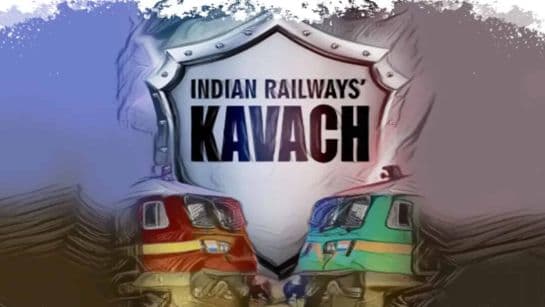
The growing deployment of Kavach 4.0 signals a new phase in railway modernisation and the adoption of indigenous technology.
India’s ambitious efforts for modernising its railway network are increasingly centred on safety, technology and automation. The latest sign of that transformation comes through a ₹279.90 crore contract awarded to Concord Control Systems for the deployment of Kavach 4.0, India’soriginal train protection system. The order, secured through associate company Progota India Private Limited, involves the installation and commissioning of onboardKavach equipment across locomotives.
As Indian Railways expands investments in advanced safety systems, companies specialising in signalling, electronics and railway automation are finding themselves at the heart of one of the country’s largest infrastructure upgrades.
Why is Kavach becoming critical to railway safety?
For decades, railway safety improvements have largely focused on infrastructure upgrades and operational reforms. Today, technology is playing a much larger role. Kavach, India’s homegrown Automatic Train Protection (ATP) system, has emerged as a key component of that strategy. The technology has been designed to minimise human error by automatically controlling train movements when safety risks arise. Through continuous communication between locomotives, signalling systems and trackside equipment, Kavach can help prevent collisions, overspeeding and signal-passing incidents.
The rollout of Kavach 4.0 marks a further evolution of the system, introducing enhanced interoperability and digital capabilities that allow it to function more efficiently across different railway environments.
Opportunities grow for railway tech companies.
As large-scale safety programmes move from pilot projects to nationwide implementation, demand is rising for specialised technology providers capable of delivering sophisticated signalling and protection systems. This is creating new opportunities for companies with expertise in railway electronics, embedded systems and safety-critical infrastructure.
Unlike traditional railway equipment contracts, projects involving train protection systems require stringent certifications, technical competence and long-term operational reliability. As a result, the market remains relatively specialised, with a limited pool of qualified participants. Industry analysts note that this environment is encouraging greater investment in research, development and domestic manufacturing capabilities, aligning with the government’s broader push for self-reliance in critical technologies.
The growing number of Kavach-related contracts awarded in recent months highlights how safety technology is becoming a central pillar of railway development. These investments are expected to improve operational efficiency while helping Indian Railways achieve its long-term objective of creating a safer and more technologically advanced transportation network.