New organic waste management systems reflect the rising demand for sustainable, decentralised waste processing.
As India grapples with increasing volumes of food and organic waste, industries and municipalities are now looking beyond conventional disposal methods towards better, more sustainable alternatives. Waste-to-energy technologies are emerging as a practical solution, helping organisations reduce landfill dependency while recovering value from waste streams.
Engineering company Kirloskar Pneumatic has now introduced Tonalli, a decentralised waste-to-energy system that has been designed to convert waste into biogasand organic fertiliser. The launch helps reflect a broader industry trend toward circular economy models, where waste is increasingly viewed as a resource rather than a disposal challenge.
Kirloskar Pneumaticintroduces Tonalli for the waste-to-energy system.
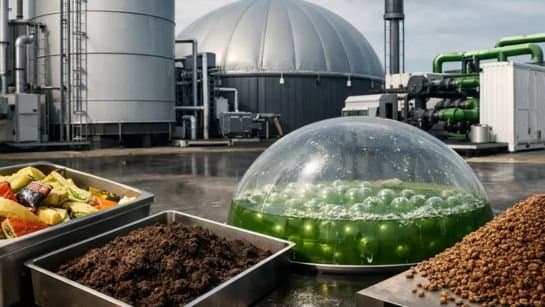
Policymakers and industry stakeholders are increasingly encouraging localised waste-processing systems that manage waste closer to its source. Decentralised solutions help reduce transportation costs, lower environmental impact, and help organisations comply with evolving waste management regulations. Recent policy developments, including India’s updated solid waste management framework, have further accelerated interest in technologies that support segregation, recycling and resource recovery. Tonalli has been developed as a compact, plug-and-play system that processes food and organic waste through anaerobic digestion. The process generates biogas for energy use and produces organic fertiliser as a by-product.
The growing adoption of waste-to-energy technologies is closely linked to corporate sustainability goals. Businesses across hospitality, manufacturing, residential communities and institutional facilities are under increasing pressure to reduce waste generation and improve environmental performance. Rather than treating waste management as a compliance requirement, many organisations now view it as an opportunity to improve resource efficiency and reduce operating costs. Technologies that enable the conversion of waste into usable energy are therefore attracting greater attention across sectors.
The bigger picture for India’s circular economy.
The introduction of systems such as Tonalli signals a wider shift in India’s approach to waste management. As urbanisation accelerates and sustainability targets become more ambitious, decentralised processing technologies are expected to play a larger role in addressing environmental challenges. Industry experts believe the future of waste management will increasingly focus on recovery, reuse and energy generation rather than disposal alone.
The launch of Tonalli highlights the growing intersection of engineering innovation, sustainability and waste management. While challenges around waste segregation and infrastructure remain, the momentum behind waste-to-energy technologies continues to build.