Zepto prepares for its public market debut and wants to now focus on profitability, customer retention, and long-term survival.
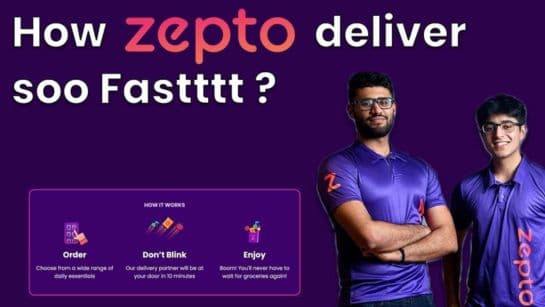
With the aim of providing customers with the quickest doorstep deliveries in just 10 minutes, the quick commerce industry has seen the rise of companies like Swiggy, Zepto, and Blinkit over the years. Their brands were built around the promise of groceries at your doorstep in under 10 minutes. However, that race is beginning to change. Zepto has a vision far beyond all this and is now shifting focus to a broader brand strategy.
As Zepto prepares for its public market debut, its latest filings reveal a broader shift in strategy. The company is increasingly focused on unit economics, dark store efficiency, and advertising revenue, a sign that the industry may be moving beyond the “fastest delivery wins” mindset. Zepto’s revenue more than doubled in FY26, but its losses remain significant, underlining the pressure to find a sustainable model.
Why dark stores matter more than delivery speed?
At the centre of Zepto’s strategy is its growing dark store network, compact warehouses placed close to dense customer zones. As of March 2026, the company operated over 1,100 dark stores, nearly matching the scale of competitors like Instamart. The logic is simple: shorter delivery distances reduce operational costs and allow delivery partners to complete more orders per hour. That improves efficiency and lowers losses per order. Zepto’s adjusted EBITDA loss per order reportedly dropped sharply over the last year, reflecting how scale can improve economics.
A major but often overlooked trend in quick commerce is the rise of retail media. Like Amazon before it, Zepto is increasingly monetising consumer attention. Its advertising business has grown rapidly, becoming a high-margin revenue stream that does not carry the logistical burden of deliveries. For quick commerce players, this could be the key to profitability.
Competition gets tougher.
The bigger challenge for Zepto may not be efficiency; it may be loyalty. With rivals like Flipkart and Amazon expanding aggressively, customer retention is becoming harder.
In a market where consumers can switch platforms with little friction, pricing and discounts still matter. For Zepto, the next phase will be less about delivering faster and more about staying relevant in an increasingly crowded battlefield.