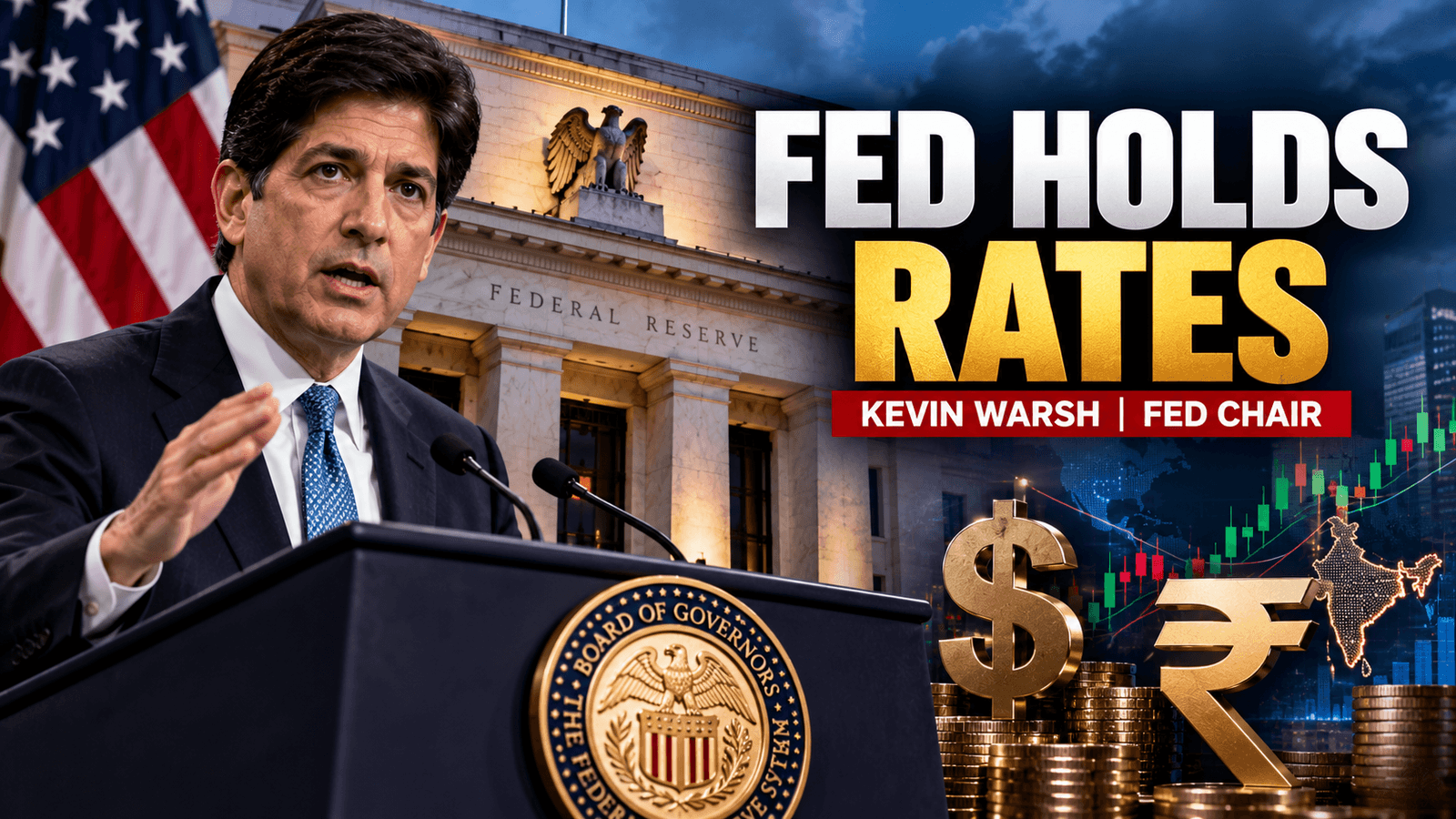
Washington/New Delhi, October 29, 2026: The US Federal Reserve has kept its benchmark interest rate unchanged at 3.75%–4%, signalling continued caution as inflation remains elevated despite resilient economic activity.
The Federal Open Market Committee (FOMC) voted 10-2 on Wednesday to maintain the target range, saying it needed more information to assess the appropriate direction of monetary policy and ensure inflation returns to its 2% objective.
The decision comes amid uncertainty over the global economic outlook, geopolitical developments and the future trajectory of prices.
The US Fed also upgraded its assessment of US economic activity, describing growth as strong and pointing to resilient domestic spending, robust capital investment and steady employment conditions.
Two officials, Lisa D. Cook and Beth M. Hammack, dissented in favour of raising rates by a quarter of a percentage point, highlighting concerns about persistent inflation.
ALSO READ: Jio Platforms Stock Surges 27% on Debut, Becomes India’s Second-Most Valuable Listed Company
Why Did the US Fed Hold Interest Rates Steady?
The US central bank is balancing two competing considerations: keeping inflation under control and avoiding unnecessarily restrictive monetary policy that could damage economic growth.
In its policy statement, the Fed said inflation remained elevated and that additional information would help it determine the appropriate policy stance.

Economic activity has remained resilient, with domestic spending holding up and capital investment remaining robust. The labour market has also shown signs of stability, according to the central bank.
These conditions reduce the urgency for immediate monetary easing. At the same time, the two dissenting votes in favour of a rate increase indicate that some policymakers remain concerned that inflation may not decline sufficiently without tighter policy.
The decision leaves investors watching incoming inflation, employment and growth data for clues about the Fed’s next move.
Could the Fed Raise Rates Again?
The Fed did not commit to a specific future rate path. Instead, it said that further information would guide its next decision.
Persistent inflation, strong consumer demand or renewed pressure from energy prices could strengthen the case for maintaining restrictive policy or raising rates. Conversely, a sustained decline in inflation or a significant weakening in economic activity could reopen the debate over rate cuts.

The two dissents in favour of a rate increase underline the uncertainty surrounding the outlook. However, they do not mean a hike at the next meeting is guaranteed.
Investors will continue to assess economic data and comments from policymakers before revising their expectations.
What Does the US Fed Decision Mean for India?
The US Fed’s policy affects India through several channels, including foreign investment flows, currency movements, borrowing costs and global demand.
1. Rupee and Dollar Pressure
Higher US Fed interest rates can support the dollar by making dollar-denominated assets more attractive to global investors.
If investors shift funds towards US bonds and other assets, emerging markets such as India can face pressure from capital outflows. That can weaken the rupee against the dollar, although the actual impact depends on several factors, including oil prices, domestic growth and investor sentiment.
A weaker rupee also increases the cost of imports priced in dollars, particularly crude oil, and can contribute to inflationary pressure.
2. Foreign Investment in Indian Markets
US Fed interest rates influence how international investors compare returns across markets.
When US yields are attractive, some investors may reduce exposure to emerging-market equities and bonds. A more stable or lower US rate environment can, under certain conditions, support flows into markets such as India.
However, the US Fed’s latest decision alone does not determine foreign investment flows. Corporate earnings, domestic valuations, economic growth and global risk appetite remain important considerations.
3. Impact on the Reserve Bank of India
The Reserve Bank of India must consider domestic inflation and growth alongside international financial conditions when setting policy.
If the rupee faces sustained depreciation and imported inflation rises, it could complicate the RBI’s policy choices. If domestic inflation moderates and economic activity weakens, the central bank may have more room to support growth.
The RBI does not mechanically follow the Fed. Its decisions are based on India’s own inflation outlook, economic conditions and financial stability considerations.
4. Borrowing Costs and Businesses
US Fed interest-rate expectations can influence global bond yields and financing conditions for companies that borrow internationally.
A prolonged period of elevated US rates can raise the cost of capital for some businesses and governments, particularly those with dollar-denominated liabilities.
For Indian companies, the effect will vary according to their borrowing structure, currency exposure and ability to pass higher costs on to customers.
What About Gold, Crude Oil and Global Markets?
Gold can face pressure when higher interest rates or bond yields increase the opportunity cost of holding an asset that does not pay interest. A stronger dollar can also weigh on gold prices, although safe-haven demand and geopolitical risks may push in the opposite direction.
Crude oil prices depend on supply and demand, geopolitical developments and expectations for global economic activity. Higher rates can eventually restrain demand, but the immediate direction of oil prices may be dominated by supply disruptions or changes in production.
Equity markets also respond differently depending on the reasons behind the Fed’s decision. A pause can support equities if it reduces fears of aggressive tightening, but persistent inflation and the prospect of future hikes can keep valuations under pressure.
Following the latest announcement, US market reactions were relatively modest, with investors continuing to assess the implications of the Fed’s cautious stance.
What Should Indian Investors Watch Next?
For Indian investors, the next phase will depend on whether US inflation begins to moderate and how the Fed interprets new economic data.
The key indicators to watch include US inflation readings, employment figures, Treasury yields, the dollar index, crude oil prices and foreign portfolio investment flows into India.
Investors should also monitor the RBI’s policy signals and domestic inflation data rather than relying solely on the Fed’s decisions.
A prolonged period of elevated US Fed interest rates could create volatility in currency and equity markets. But the impact will depend on the interaction between global conditions and India’s domestic economic performance.