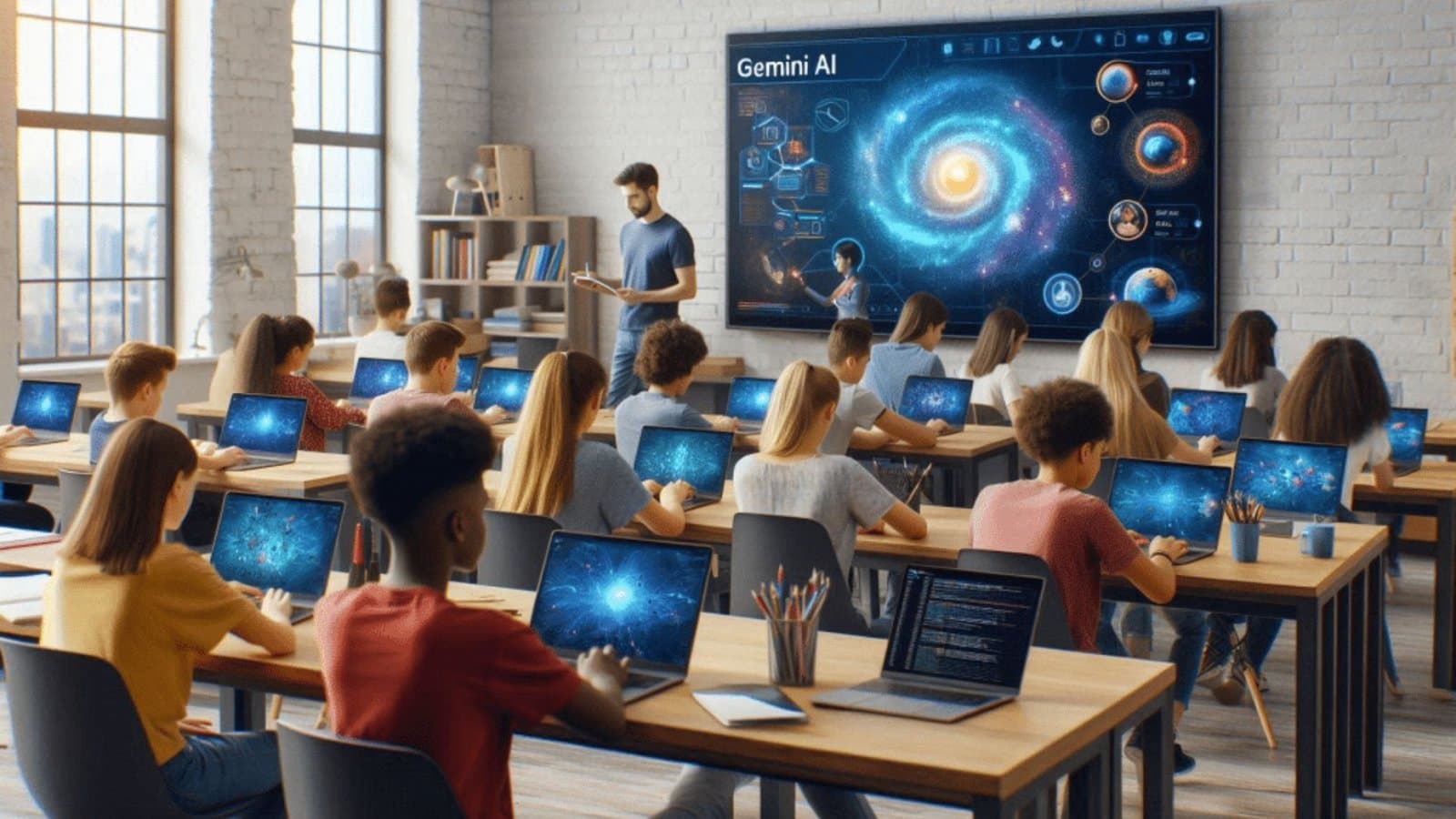
New integration brings AI-powered learning tools to students across age groups, with schools retaining control over access.
Google is now expanding the role of artificial intelligence in education by bringing Gemini directly into Google Classroom for students of different age groups. The move is part of the company’s wider push to integrate generative AI into everyday learning while giving schools control over how students use the technology. The new Gemini integration is designed to let students seek help with subjects, assignments, and learning materials without leaving the Classroom environment. Students can use the AI to work through questions, explore concepts, and receive guidance on areas where they may need additional support.
Google has also positioned Gemini as a learning aid rather than simply an answer-generating tool. Its education-focused AI features are designed to support explanations and encourage students to understand topics more deeply. The expansion follows Google’s earlier move to make Gemini available to students of all ages, with additional safeguards for younger users. These include stricter content policies and AI literacy guidance intended to promote responsible use of generative AI.
Schools can control student access.
Despite the wider rollout, access isn’t automatically unrestricted. School administrators can determine whether students receive access to Gemini and can manage availability for particular groups.
This administrative control is significant as schools continue to assess how generative AI should be used in academic settings. While AI can provide personalised assistance, educators and technology administrators are also weighing concerns around overdependence, accuracy and academic integrity. Google’s own education guidance states that generative AI tools for students under 18 have been designed with administrative controls and safeguards.
AI becomes part of the education debate.
The Classroom integration comes as schools worldwide grapple with how quickly AI should enter everyday education. Some institutions are experimenting with supervised AI use, while others are imposing tighter restrictions, particularly for younger students.
For Google, placing Gemini within Classroom represents a shift from students accessing AI separately to using it alongside their regular coursework. The development could make AI assistance a more familiar part of learning, but its effectiveness will ultimately depend on how schools, teachers and students choose to use the technology.