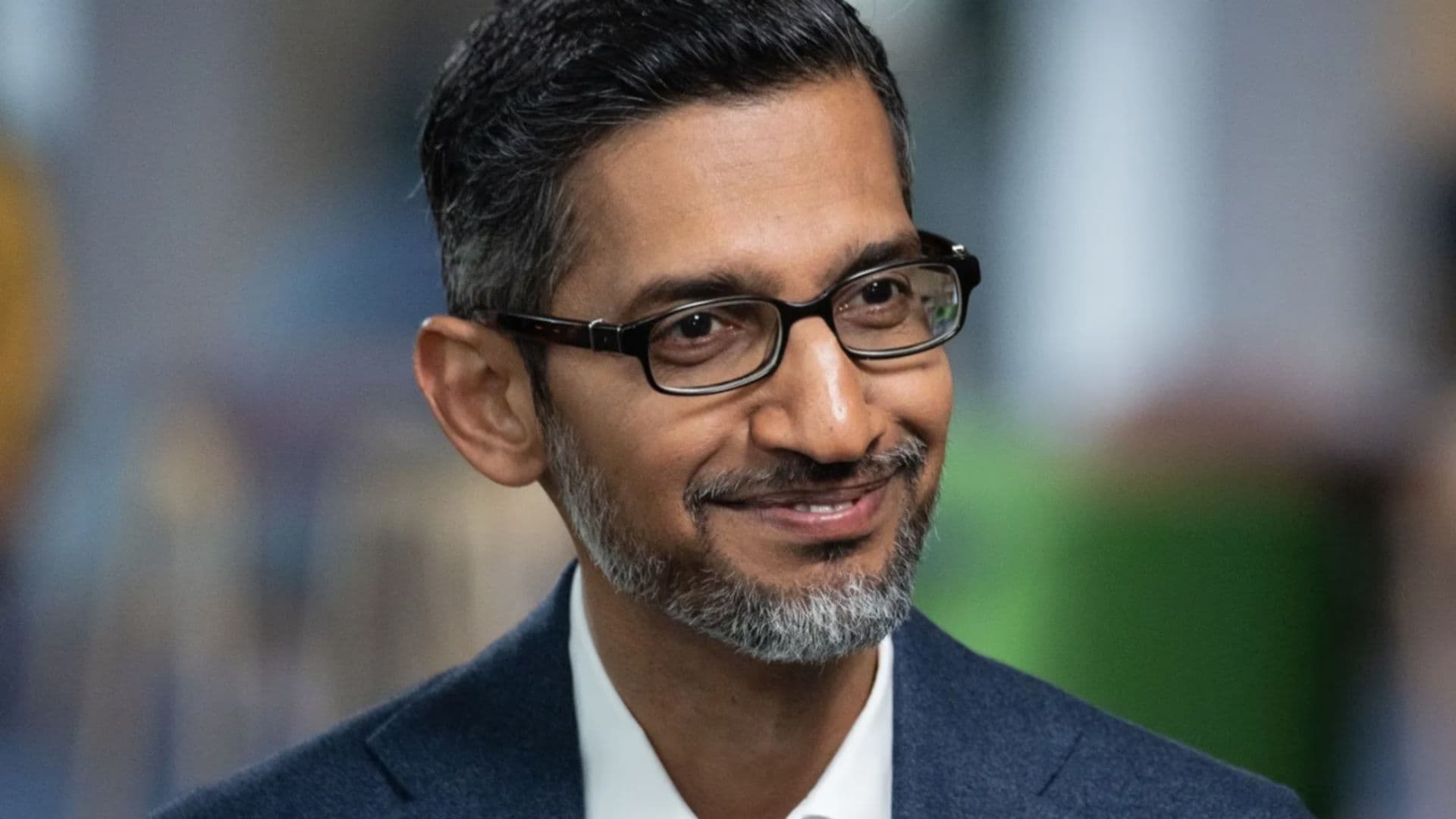
In a candid podcast interview, Pichai acknowledged that Anthropic’s Claude Code and OpenAI’s Codex have established a lead Google did not see coming, and explained why the gap exists.
Sundar Pichai has built a reputation for measured optimism. Still, in a recent appearance on The
New York Times’ Hard Fork podcast, the Google CEO said something unusually direct: his company is trailing its rivals in agentic coding, the specific AI capability that has become the industry’s most profitable battleground.
What Pichai Actually Said
“When it comes to agentic coding with tool use, instruction following and long-horizon tasks, I think we are a bit behind at this moment,” Pichai told the podcast. He went on to explain the root cause with equal candour. Google never had the developer surface that Anthropic and OpenAI captured early, which meant it never accumulated the feedback loop of real-world coding data those tools generated. “We maybe didn’t quite have the surface, like Claude Code as an example,” he said.
Why Agentic Coding Became the Prize
The AI coding tools market is expected to grow from $9.3 billion this year to roughly $30 billion by 2031, according to Mordor Intelligence. Anthropic’s revenue surged on the back of Claude Code. OpenAI pivoted its enterprise strategy around Codex. Both companies picked one high-value problem and built relentlessly around it while Google spread its AI investments more broadly.
Google’s Response
At I/O 2026, Google rolled out Antigravity 2.0—a desktop app with its own command-line interface, an SDK, and tools to manage multiple AI agents at once. Alongside it, Google showed off Gemini 3.5 Flash, a model built with Antigravity that’s supposed to run much faster than other leading AIs out there. They also announced a new AI Ultra subscription at $100 a month and dropped the price of their top-tier plan from $250 to $200, hoping to attract serious programmers.
Sundar Pichai seems sure they’ll catch up, saying internal token use is doubling every week—a sign, he thinks, that things are picking up. But even he has to admit there’s work ahead; his CFO pointed out that Anthropic’s engineers rely on AI for nearly all their code, while Google’s engineers still rely on AI for about half of their code.