New agreements focus on technology access, mentorship, market opportunities, and industry participation for India’s growing startup ecosystem.
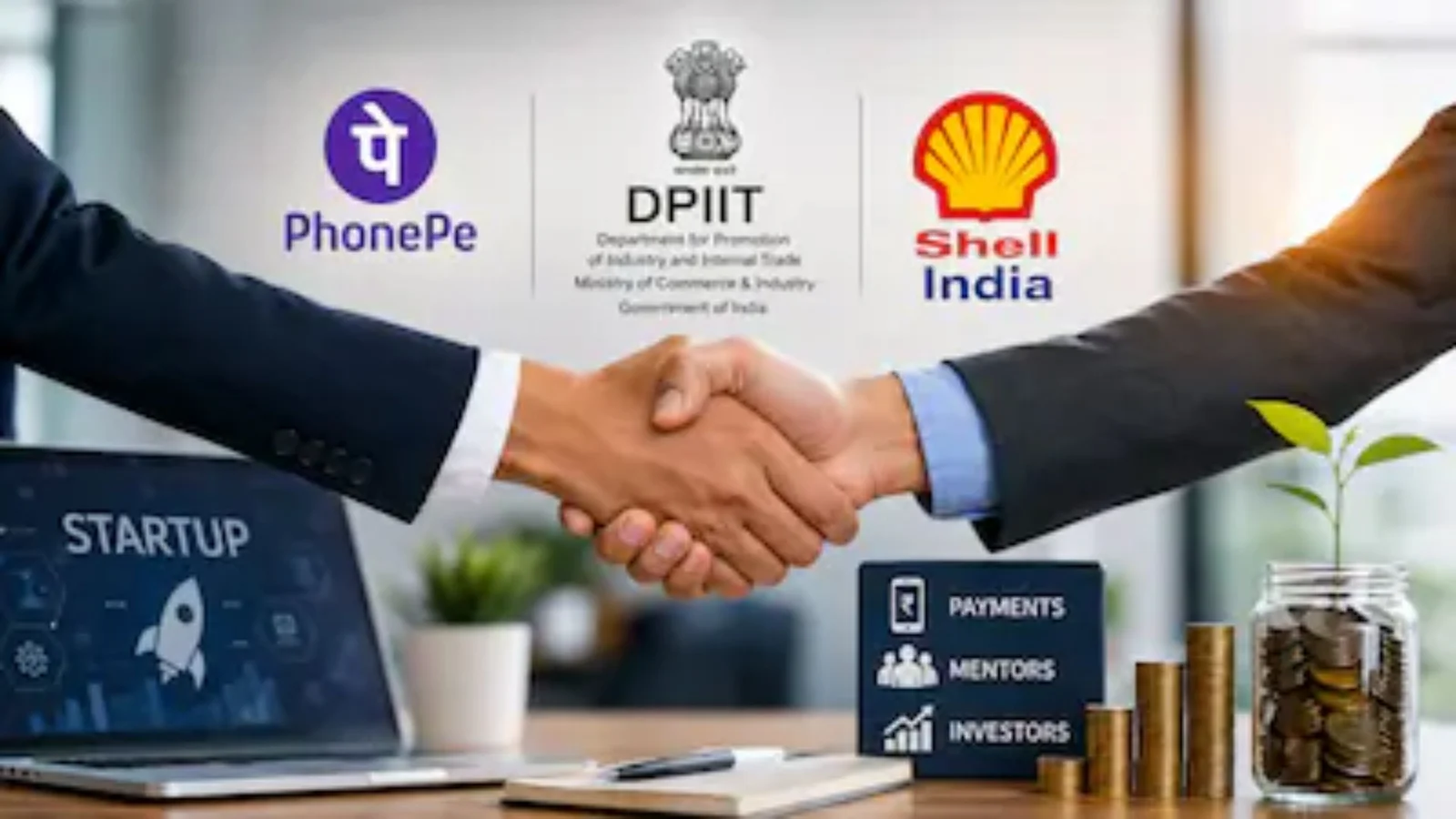
The Department for Promotion of Industry and Internal Trade (DPIIT) has signed separate Memoranda of Understanding (MoUs) with PhonePe and Shell India as part of efforts to strengthen support for startups and innovation-led businesses in India.
The agreements, signed recently, aim to improve startups’ access to technology, digital infrastructure, mentorship, and market opportunities. The partnerships bring private-sector companies into a broader government effort to address practical challenges faced by early-stage businesses.
PhonePe partnership focuses on digital infrastructure.
Under the agreement with PhonePe, DPIIT-recognised startups will receive access to digital tools and technology-related support. The partnership is expected to cover areas including digital payments, financial technology and other services that can help startups build and scale their operations.
The collaboration also includes provisions for knowledge-sharing and engagement with founders. Such initiatives are intended to give startups greater exposure to industry expertise while helping entrepreneurs understand issues related to digital transactions and business operations. For startups operating in sectors where online payments and digital platforms are central to their business models, access to established infrastructure can be particularly relevant as they develop their products and services.
Shell India to support innovation.
The second MoU, signed with Shell India, focuses on strengthening links between startups and the energy and technology ecosystem. The partnership is expected to create opportunities around innovation, technology development and collaboration between startups and industry. Areas associated with energy transition and emerging technologies are likely to form part of the engagement, reflecting the growing role of startups in developing solutions for changing industrial requirements.
The arrangement also seeks to provide entrepreneurs with access to industry knowledge and networks that can help bridge the gap between early-stage innovation and commercial applications. The agreements are part of DPIIT’s wider approach of working with companies and ecosystem institutions to strengthen India’s startup environment. Recent partnerships have also covered areas such as cloud computing, mobility technology, artificial intelligence, digital payments, investment and global market access.
The latest MoUs emphasize practical ecosystem support rather than funding alone. Their effectiveness will ultimately depend on how these partnerships are implemented and how widely eligible startups can access the programmes.
As India’s startup sector continues to expand across technology, fintech, energy, and other emerging industries, government-industry collaboration is becoming an increasingly visible part of efforts to build a stronger innovation ecosystem.