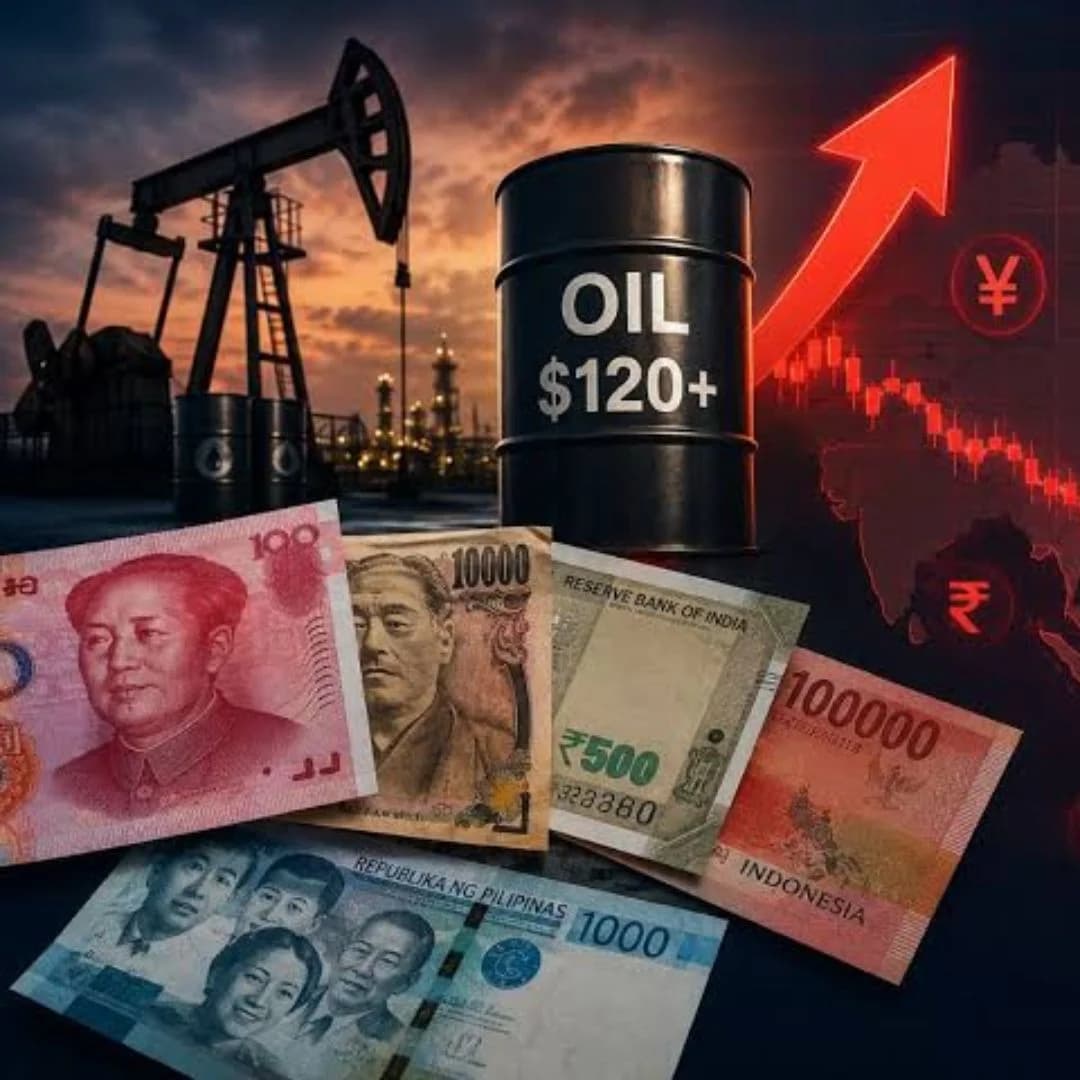
Higher crude costs and uncertainty over the Strait of Hormuz are adding pressure to the Indian currency as markets watch the next move in the Middle East.
As per reports, on Tuesday, the Indian rupee opened weaker as rising oil prices and uncertainty over stalled US-Iran peace talks increased pressure on the currency. Hence, it’s facing fresh pressure and has come under strain as demand for US dollars from importers has remained strong, while concerns over energy supplies have added another layer of uncertainty for investors.
On Tuesday, the rupee closed at ₹95.4350 against the US dollar, down 0.15% from the previous session and near its weakest level in almost two weeks. Market participants are now closely tracking oil prices and developments around the US-Iran conflict for signs of where the currency could move next.
Higher oil costs add to import pressure.
Crude oil remains a key concern for India because of the country’s heavy dependence on imports. India imports nearly 90% of its crude oil requirements, making the rupee particularly sensitive to sharp movements in global energy prices.
Brent crude rose nearly 2.5% to around $89.90 a barrel on Tuesday after renewed uncertainty over a possible US-Iran agreement. Earlier, oil prices had also moved higher as hopes of an agreement that could facilitate the reopening of the Strait of Hormuz weakened. For India, sustained increases in crude prices can widen the import bill and increase demand for dollars. That combination can put additional pressure on the Indian rupee and potentially complicate the broader inflation outlook.
Intervention by the RBI can offer some support.
Traders indicated that the central bank was likely selling dollars to limit excessive volatility and prevent a sharp fall in the rupee. Such intervention has helped contain currency movements despite renewed geopolitical concerns. The one-month implied volatility of the dollar-rupee pair fell to 4.6%, its lowest level since late June, suggesting that traders continue to expect the RBI to act against unusually large swings.
The direction of the rupee is likely to remain closely linked to developments in the Middle East. Any progress in US-Iran negotiations could ease concerns over oil supplies and reduce pressure on emerging-market currencies. Conversely, a prolonged standoff or disruption around the Strait of Hormuz could keep crude prices elevated and increase pressure on India’s external accounts.
Investors are also watching upcoming inflation data from India and the United States. With oil prices, geopolitical risks and economic indicators all influencing currency movements, the rupee’s near-term trajectory is likely to remain sensitive to developments both at home and abroad.